Blog
The Art of Living Well: Integrating Shinsei Taiso Do Into Everyday Life.
By Dr Cibi John Francis Ph.D (www.drjohnfrancis.com)
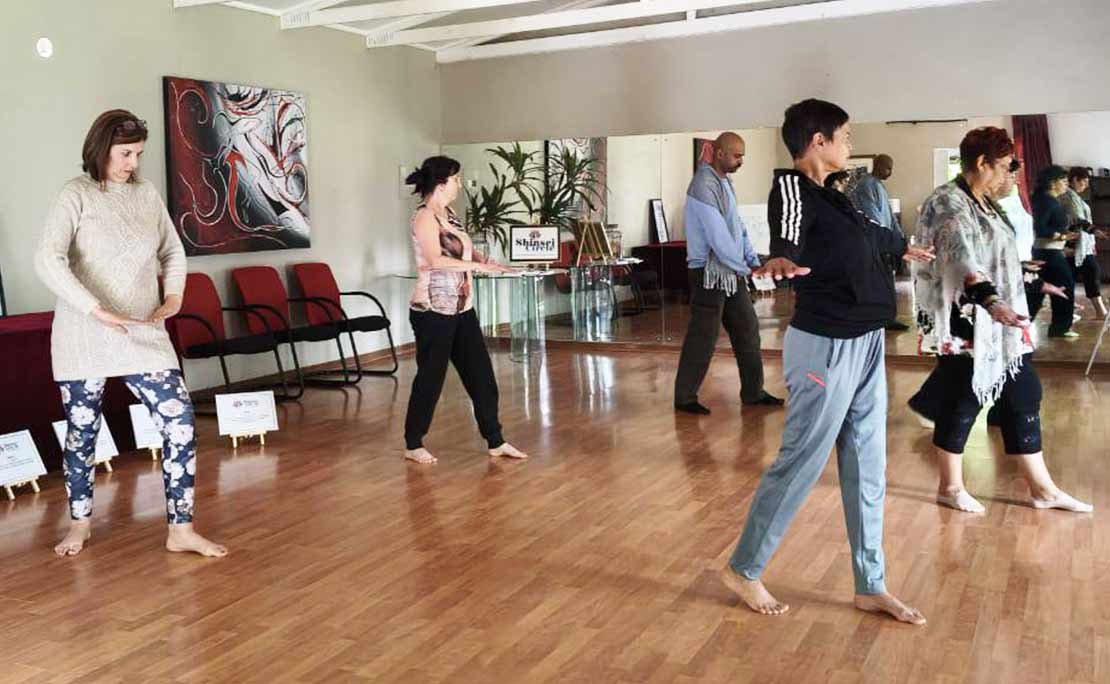
To live well is not merely to exist without illness - it is to move through life with clarity, stability, and quiet strength. Yet modern living often fragments this possibility. We rush, we react, we accumulate stress in the body and noise in the mind. Health becomes something we chase, not something we embody.
Ancient Eastern traditions approached life differently. They did not separate health from daily living. Movement, breath, awareness, and discipline were not occasional practices—they were woven into the fabric of life itself. Today, systems like Shinsei Taiso Do, deeply inspired by Yoga science and martial arts, are reviving this timeless understanding: well-being is not an activity—it is a way of living.
Living well as a practice, not a goal
In modern culture, wellness is often treated as a goal—something to achieve through programs, diets, or short-term effort. But Eastern philosophy suggests something far more profound: health emerges from daily alignment, not occasional correction.
In Yoga, this is expressed through the integration of asana (movement), pranayama (breath), and dhyana (awareness). In martial arts, the same principle appears through disciplined repetition, posture, and controlled movement. Shinsei Taiso Do unites these ideas into a modern framework—transforming ordinary daily actions into opportunities for renewal.
Scientific research now supports this view. Studies show that regular mind–body practices like yoga improve autonomic nervous system balance, shifting the body toward parasympathetic dominance—the state associated with recovery, healing, and emotional stability.
Living well, therefore, is not about intensity - it is about consistency of alignment.
The nervous system: the foundation of everyday well-being
At the core of Shinsei Taiso Do lies a simple truth: your quality of life reflects the state of your nervous system.
When the nervous system is chronically activated by stress, the body remains in a fight-or-flight state. Over time, this leads to fatigue, anxiety, poor sleep, and chronic disease. Research shows that increased stress and time pressure are directly associated with reduced heart rate variability (HRV), a marker of reduced resilience and increased emotional exhaustion.
Yoga and slow martial movement offer a powerful counterbalance. Studies demonstrate that these practices:
• Enhance parasympathetic activity
• Reduce cortisol (stress hormone) levels
• Improve mood and emotional stability
Shinsei Taiso Do integrates these mechanisms into daily life through slow, intentional movement and breath awareness. Instead of escaping stress occasionally, it reconditions how the body responds to stress continuously.
Movement as meditation in daily life
In Eastern martial arts, slow movement is not merely preparation - it is transformation. Before speed and power, practitioners cultivate stillness within motion. This is where awareness is refined and internal balance is built.
Similarly, Yoga teaches that movement performed with awareness becomes meditation. Scientific literature confirms that such mindful movement improves psychological well-being, reducing anxiety, depression, and stress levels significantly across multiple studies.
Shinsei Taiso Do brings this into everyday living. Walking becomes an opportunity to align posture and breath. Sitting becomes a practice of awareness. Simple exercises become tools for resetting the nervous system.
Over time, this transforms daily life into a continuous practice - not separate from it.
Hormonal balance and longevity: the hidden benefits
One of the most powerful yet invisible effects of integrating mindful movement into daily life is its influence on hormonal health.
Chronic stress disrupts the hypothalamic–pituitary–adrenal (HPA) axis, leading to irregular cortisol patterns, inflammation, and metabolic imbalance. Yoga-based practices have been shown to reduce cortisol levels, normalize stress responses, and improve overall physiological balance.
Even gentle practices like stretching and slow movement can significantly reduce chronic stress severity and improve long-term health markers.
This is why Shinsei Taiso Do emphasizes slow, sustainable practice rather than intensity. The goal is not to exhaust the body, but to restore its natural rhythms.
Martial arts philosophy: discipline in simplicity
Martial arts are often misunderstood as systems of combat. In truth, they are systems of self-mastery.
A foundational principle across traditional martial arts is this:
“Master the basics slowly, and mastery will arise naturally.”
Slow repetition develops:
• Structural integrity
• Mental focus
• Emotional control
Scientific studies on Tai Chi and similar practices confirm that these forms improve psychological well-being, reduce stress and anxiety, and enhance overall life satisfaction.
Shinsei Taiso Do carries this philosophy into modern life. It teaches that discipline is not about force - it is about consistency in simple, mindful actions.
From exercise to lifestyle: integration is the key
The true transformation happens when practice is no longer separate from life.
Instead of:
Exercising for one hour and remaining stressed for the rest of the day
- Shinsei Taiso Do encourages:
- Breathing consciously during work
- Moving mindfully throughout daily tasks
- Returning to alignment repeatedly
Research on stress-reducing interventions shows that consistent, integrated practices significantly improve heart rate variability and reduce cardiovascular risk over time.
This means the future of wellness lies not in isolated sessions, but in integrated living.
Conclusion: Living well is a daily art
The art of living well is not found in extremes, but in subtle, consistent alignment. Shinsei Taiso Do, inspired by Yoga science and martial arts, offers a path where movement, breath, and awareness become part of everyday life.
Science now confirms what ancient traditions have always known:
• Slow, mindful movement heals
• Breath regulates the nervous system
• Awareness transforms experience
To live well is not to add more effort - it is to bring more presence into what already exists.
In this way, Shinsei Taiso Do is not just a method. It is a way of living - quietly powerful, deeply restorative, and profoundly human.
________________________________________
Bibliographical References:
• Eda, N., et al. (2020). Yoga stretching improves parasympathetic activity and stress hormones. Journal of Physical Therapy Science.
• Padmavathi, R., et al. (2023). Role of yoga in stress management. Journal of Ayurveda and Integrative Medicine.
• Sengupta, P. (2012). Health impacts of yoga and pranayama. International Journal of Preventive Medicine.
• Abbott, R., et al. (2013). Tai Chi and Qigong for psychological well-being. American Journal of Health Promotion.
• Vinay, A. V., et al. (2016). Impact of yoga on heart rate variability. International Journal of Yoga.
• Schmid, R. F., et al. (2024). Stress, HRV, and emotional exhaustion. Scientific Reports.
Related Blog
-
Why Slow Movement is the Future of Fitness and Stress Relief?
Shinsei Taiso Do, Yoga Science, and Martial Arts Wisdom in the 21st CenturyWe live in a world that prizes speed. But when life speeds up, the body a...
-
Mindful Fitness vs High-Intensity Training: Which Is Better for Long-Term Health?
‘A Science-Informed Dialogue Between Modern Exercise and Eastern Movement Wisdom’By Dr Cibi John Francis Ph.D In the modern fitness world, high-i...
-
Why Lifestyle Modification, Not Motivation, Is the Key to Long-Term Health?
By Dr Cibi John Francis(www.drjohnfrancis.com)People applaud motivation. Motivational quotes fill our feeds, and short bursts of enthusiasm often spar...