Blog
Why High Blood Pressure Is Hard to Control Naturally: 10 Science-Backed Reasons
By Dr Cibi John Francis Ph.D (www.drjohnfrancis.com)
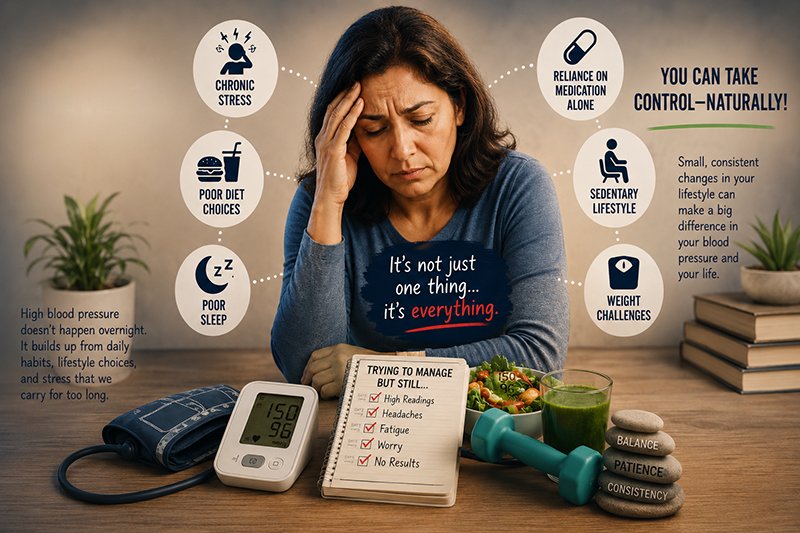
High blood pressure has become one of the most common health problems in modern life. What makes it even more confusing is this:
Many people try to eat better.
Some exercise regularly.
Others take supplements, reduce salt, or follow strict diets.
Yet their blood pressure still remains high.
This often leaves people frustrated and worried.
The deeper truth is that high blood pressure is rarely caused by one single factor. Modern research from universities, cardiovascular institutes, and metabolic science centers now shows that blood pressure problems are connected to a much bigger picture involving:
- chronic stress
- nervous-system imbalance
- inflammation
- poor sleep
- emotional overload
- insulin resistance
- ultra-processed foods
- sedentary lifestyle
- vascular stiffness
- and even chronic mental tension
In other words:
‘High blood pressure is not only a heart problem.
It is often a “whole-body stress adaptation problem’’.
The Real Science Behind Blood Pressure
Blood pressure is the force of blood pushing against the walls of your arteries. The body naturally adjusts this pressure every moment depending on:
- stress
- movement
- breathing
- hydration
- hormones
- emotional state
In healthy conditions, the body regulates this system smoothly. But modern life constantly overstimulates the nervous system. Researchers now understand that chronic activation of the sympathetic nervous system (“fight-or-flight mode”) plays a major role in hypertension.
When stress becomes constant:
- blood vessels tighten
- heart rate increases
- inflammation rises
- cortisol remains elevated
- arteries become less flexible
Over time, high blood pressure becomes the body’s new “normal.”
Why Exercise Alone Sometimes Doesn’t Work
One of the biggest misconceptions is:
“If I exercise, my blood pressure should automatically improve.”
Many people believe that regular exercise alone is enough to control high blood pressure naturally. But the human body is far more complex than calories burned or steps counted. A person may exercise daily and still struggle with hypertension because the body is also deeply affected by stress, poor sleep, emotional tension, unhealthy eating patterns, and nervous-system overload. True healing begins when movement is combined with recovery, balance, and a healthier way of living—not just physical activity alone.
So, Exercise is important. But it cannot completely cancel out:
- chronic stress
- poor sleep
- emotional burnout
- excessive processed foods
- alcohol and smoking
- nervous-system overload
‘A person may physically exercise while internally remaining stressed. Recent cardiovascular research shows that chronic psychological stress directly affects blood vessel function and autonomic nervous-system regulation. This is why some highly active people still develop hypertension. The body responds to the total lifestyle environment - not exercise alone.’
The Silent Role of the Nervous System
Modern research is beginning to reveal something many people have never been taught: high blood pressure is not only connected to the heart and blood vessels, but also to the nervous system itself. The autonomic nervous system silently controls how the body responds to stress, tension, emotions, breathing, and recovery. When this system remains constantly overloaded, the body can stay trapped in a state of internal pressure, making it much harder for blood pressure to return to balance naturally.
The body has two main nervous-system states:
1. Sympathetic System
“Fight-or-flight”
- raises blood pressure
- increases heart rate
- prepares for danger
2. Parasympathetic System
“Rest-and-recovery”
- relaxes blood vessels
- slows the heart
- restores balance
Modern lifestyles keep many people trapped in sympathetic dominance.
- Constant notifications
- Mental Overload.
- Financial Stress.
- Lack of Rest.
- Poor Breathing Patterns.
The body never fully relaxes. Researchers from major cardiovascular studies now describe chronic stress and nervous-system dysregulation as key contributors to resistant hypertension.
What Eastern Traditions Understood Long Ago
Long before modern science measured blood pressure, Eastern philosophies recognized that tension changes the body. In traditional martial arts, practitioners were taught:
“A calm mind creates a stable body.”
Internal martial systems emphasized:
- relaxed movement
- controlled breathing
- emotional discipline
- nervous-system regulation
The goal was not only physical strength - but internal balance. This same understanding appears in practices like Shinsei Taiso Do.
Shinsei Taiso Do and Blood Pressure Regulation
Shinsei Taiso Do approaches health differently from conventional fitness systems. Instead of focusing only on intense physical output, it focuses on:
- nervous-system balance
- mindful movement
- breathing regulation
- reducing internal tension
- restoring body awareness
Why does this matter?
Because breathing patterns and stress levels directly affect blood pressure regulation. Research shows that slow breathing practices can reduce sympathetic nervous-system activity and improve blood pressure control naturally. When movement and breathing are combined mindfully, the body begins shifting out of survival mode.
The Modern Lifestyle Problem Nobody Talks About
Many people today live in a constant state of hidden tension. Even while resting, their bodies remain activated. These all are because of the poor lifestyle patterns and habits.
Common signs include:
- jaw tension
- shallow breathing
- tight shoulders
- racing thoughts
- poor sleep
- fatigue despite rest
This chronic internal tension affects:
- blood vessel constriction
- inflammation
- hormonal balance
- cardiovascular strain
‘Remember this: The body cannot heal deeply while remaining physiologically stressed.’
The Real Solution: A Full-System Approach
Modern research increasingly shows that long-term blood pressure improvement requires more than medication or occasional exercise. The most successful long-term improvements involve:
- lifestyle modification
- stress reduction
- improved sleep
- healthy nutrition
- movement
- emotional regulation
- nervous-system recovery
‘The body heals best when the entire system becomes more balanced.’
10 Powerful Strategies to Naturally Support Healthy Blood Pressure
1. Slow Down Your Breathing
Slow breathing activates the parasympathetic nervous system.
Try:
- slow nasal breathing
- longer exhalations
- 5–10 minutes daily
This simple practice may help lower stress responses naturally.
2. Improve Sleep Recovery
Poor sleep strongly affects:
- cortisol
- blood pressure
- inflammation
- insulin sensitivity
Aim for:
- consistent sleep schedule
- reduced screen exposure at night
- deeper recovery sleep
3. Reduce Chronic Mental Overload
The brain affects the heart more than most people realize.
Helpful practices:
- meditation
- journaling
- mindful walking
- Shinsei Taiso Do movement routines
4. Move Daily - But Wisely
Movement should regulate the body, not constantly exhaust it. The most beneficial approach often combines:
- walking
- strength training
- stretching
- mindful movement
- mobility work
5. Reduce Ultra-Processed Foods
Modern processed foods often contain:
- excess sodium
- sugar
- inflammatory fats
Research strongly links ultra-processed diets with hypertension risk.
6. Support Blood Vessel Health
Foods rich in:
- potassium
- magnesium
- fiber
- omega-3 fats
May support vascular function naturally.
7. Learn to Relax the Body
Many people do not realize how tense they are.
Practice:
- relaxing the jaw
- dropping the shoulders
- softening the breath
Always Keep it in mind: ‘Small tension releases matter.’
8. Reduce Sitting Time
Even regular exercisers may develop vascular stiffness from prolonged sitting. Frequent movement throughout the day is important.
9. Address Emotional Stress
Unresolved emotional stress affects physiology. Chronic anger, anxiety, and emotional overload increase sympathetic activation.
Remember - Emotional health is cardiovascular health.
10. Create a Sustainable Lifestyle
The most powerful changes are not extreme. They are consistent.
The body responds better to:
- small daily improvements
than - short-term intensity
A New Understanding of High Blood Pressure
Perhaps blood pressure is not simply a disease to suppress. Perhaps it is also a message. A message that the body has adapted to:
- stress
- overload
- inflammation
- disconnection from recovery
The solution is not only “trying harder.” It is creating a life where the body no longer feels constantly under threat.
Final Reflection
Modern life teaches people to push harder. But the body often heals through the opposite:
- slowing down
- breathing deeper
- sleeping better
- moving mindfully
- reducing internal tension
Practices like Shinsei Taiso Do remind us that true health is not built only through force and intensity. Sometimes the strongest heart is created through calmness, balance, and awareness.
Bibliographical References:
- Grassi, G., et al. (2024). Sympathetic nervous system and hypertension. Hypertension Research.
- Brook, R. D., et al. (2024). Stress and cardiovascular disease mechanisms. American Heart Association Report.
- Harvard Medical School. (2025). Stress, inflammation, and high blood pressure.
- Parati, G., et al. (2024). Autonomic dysfunction in resistant hypertension. European Society of Cardiology Review.
- Joseph, C. N., et al. (2024). Slow breathing and autonomic regulation in hypertension. Journal of Hypertension.
- Yale School of Medicine. (2025). Breath regulation and blood pressure control.
Related Blog
-
Why Slow Movement is the Future of Fitness and Stress Relief?
Shinsei Taiso Do, Yoga Science, and Martial Arts Wisdom in the 21st CenturyWe live in a world that prizes speed. But when life speeds up, the body a...
-
Mindful Fitness vs High-Intensity Training: Which Is Better for Long-Term Health?
‘A Science-Informed Dialogue Between Modern Exercise and Eastern Movement Wisdom’By Dr Cibi John Francis Ph.D In the modern fitness world, high-i...
-
Why Lifestyle Modification, Not Motivation, Is the Key to Long-Term Health?
By Dr Cibi John Francis(www.drjohnfrancis.com)People applaud motivation. Motivational quotes fill our feeds, and short bursts of enthusiasm often spar...