Blog
Why Slow Movement is the Future of Fitness and Stress Relief?
By Dr Cibi John Francis Ph.D (www.drjohnfrancis.com)
By Dr Cibi John Francis
(www.drjohnfrancis.com)
Shinsei Taiso Do, Yoga Science, and Martial Arts Wisdom in the 21st Century
We live in a world that prizes speed. But when life speeds up, the body and mind most often slow down - slipping into chronic tension, disrupted sleep, anxiety, and inflammation. In response, a quieter revolution is rising: slow movement. Rooted in Eastern philosophical systems - Yoga’s integrative science, the mindful applications of classical martial arts, and refined today in practices like Shinsei Taiso Do - slow movement is proving to be the most sustainable, regenerative route to fitness and stress resilience.
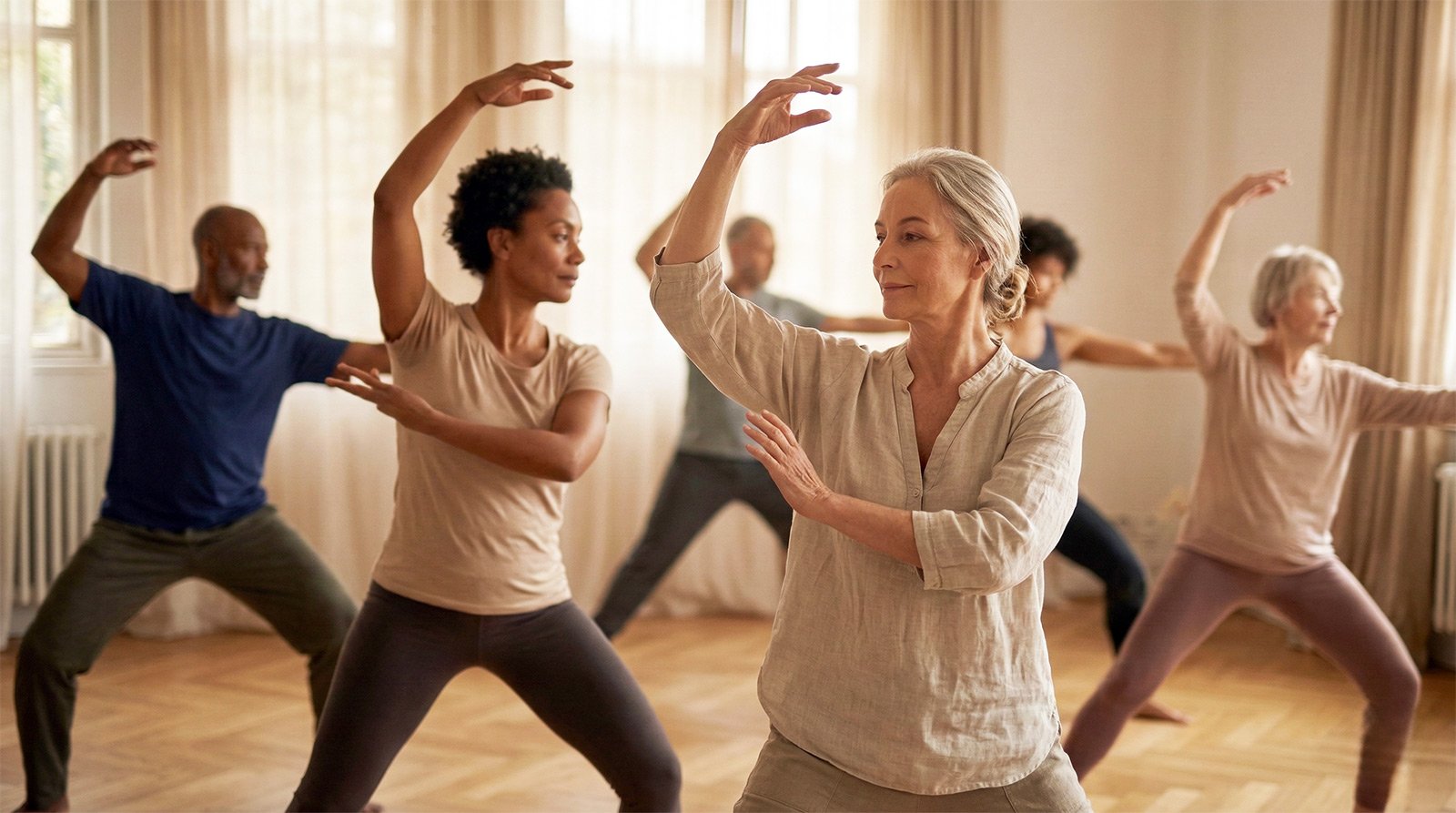
Shinsei Taiso Do is more than a set of exercises; it is a practice of re-education. It borrows the precision and structural intelligence of martial arts, the breath-centred awareness of Yoga, and reworks those principles into progressive, slow-tempo routines that rewire the nervous system and strengthen the body without breakdown.
The philosophical foundation: body, breath, and attention
Eastern traditions begin with a radical premise: the human being is an integrated system of body, breath, and consciousness. In Yoga, posture (asana) and breath (pranayama) are yoked to cultivate presence; in martial arts, slow foundational drills develop balance, timing, and centeredness long before speed and power. Shinsei Taiso Do intentionally places this triad at the centre of training - slow, deliberate movement + coordinated breath + focused attention - so the practitioner trains physiology and psychology together. The result is not passive relaxation but deepened capacity: strength that is steady, responses that are measured, and a mind that recovers faster from stress.
Nervous-system regulation: measurable change from mindful motion
One of the strongest scientific findings supporting slow movement is its effect on autonomic regulation. Heart-rate variability (HRV) - a common biomarker of vagal (parasympathetic) tone and stress resilience - consistently improves after programs of Shinsei Taiso Do, Tai Chi and Yoga. Meta-analytic evidence shows that mind–body exercises produce favourable HRV changes and reduce perceived stress, indicating improved autonomic balance. This physiological shift explains why practitioners feel calmer and bounce back faster after emotional or physical challenges.
Slow movement in Shinsei Taiso Do trains the nervous system to “down-shift” deliberately: slow, exhalation-led patterns and gentle load stimulate vagal pathways, lowering baseline arousal and making the body less reactive to modern stressors.
Hormonal and inflammatory benefits: less wear, more repai
Chronic stress dysregulates cortisol rhythms and promotes low-grade inflammation - two pathways that drive fatigue, mood disorders, and chronic disease. Mindfulness-based movement interventions (which combine slow motion and awareness) have shown reductions in cortisol reactivity and improvements in stress biomarkers in several controlled studies and meta-analyses. While effect sizes vary by protocol and population, the consistent trend points to meaningful physiological down-regulation when slow, mindful practices are performed regularly.
Because Shinsei Taiso Do integrates breath regulation (slow pranayama-style breathing) with movement, it targets these hormonal pathways directly: the combined stimulus is more than exercise - it’s a stress-modifying ritual.
Because Shinsei Taiso Do integrates breath regulation (slow pranayama-style breathing) with movement, it targets these hormonal pathways directly: the combined stimulus is more than exercise - it’s a stress-modifying ritual.
Neuroplasticity and mindful movement: retraining the brain through intent
Modern neuroscience shows that the brain changes with experience - neuroplasticity is not reserved for labs or surgeries. Physical activity promotes neurotrophic factors and network reorganization; importantly, movement that is slow, attentionally rich, and varied (as in Yoga and classical martial arts) appears especially effective at building precise motor maps and emotional-regulation networks. Recent reviews link mind–body exercise with improved cognitive function and markers of neuroplasticity, particularly in aging brains or those recovering from injury. Slow, intentional practice - core to Shinsei Taiso Do - gives the brain high-quality sensory feedback that rewires habitual tension patterns into adaptive, resilient movement.
Functional fitness without breakdown: balance, strength, mobility
Slow martial forms such as Tai Chi were designed as training methods that develop functional strength, timing, and balance without unnecessary joint stress. Large bodies of evidence show Tai Chi and similar low-impact practices improve balance, reduce fall risk in older adults, and enhance functional mobility - outcomes that matter for lifelong health and independence. Shinsei Taiso Do merges these martial-arts foundations with Yoga’s alignment principles to cultivate strength that supports daily life, not merely athletic spectacle.
Why the future is “slow + intelligent”
- Sustainability: people are far more likely to sustain low-impact, meaningful practices than recurring high-intensity regimes that cause burnout.
- Accessibility: slow movement needs little equipment, scales to different ability levels, and is culturally adaptable.
- Multiplicative benefits: strength, balance, hormonal regulation, and emotional stability evolve together - producing resilience that fitness alone rarely achieves.
These features
make Shinsei Taiso Do an ideal 21st-century practice: an evidence-friendly,
philosophically grounded system that meets modern bodies where they are and
guides them toward durable health.
Speed is seductive. But for many, speed has become the problem we must solve. Shinsei Taiso Do - and the slow, intelligent practices of Yoga and classical martial arts - offers a different promise: not maximal output, but maximal living. Backed by modern science, grounded in Eastern philosophy, and accessible to all bodies, slow movement is not a regression. It is the future of fitness and stress relief - an invitation to move less hurriedly, and live more fully.
Key sources:
Zou, L., Wang, H., et al. (2018). Effects of mind–body exercises (Tai Chi/Yoga) on heart rate variability parameters and perceived stress: A systematic review with meta-analysis. Journal of Clinical Medicine. Retrieved from https://www.ncbi.nlm.nih.gov/pmc/articles/PMC6262541/.
Zhou, Y., Wang, Q., Larkey, L., James, D. (2024). Tai Chi effects on heart rate variability: A systematic review and meta-analysis. Journal of Integrative and Complementary Medicine.
Sanada, K., et al. (2016). Effects of mindfulness-based interventions on salivary cortisol: A meta-analytic review. Psychoneuroendocrinology. Retrieved from https://www.ncbi.nlm.nih.gov/pmc/articles/PMC5069287/.
Ezzdine, L. B., et al. (2025). Physical activity and neuroplasticity in neurodegenerative disease: mechanisms and interventions. Neural Plasticity.
ShareRelated Blog
-
Mindful Fitness vs High-Intensity Training: Which Is Better for Long-Term Health?
‘A Science-Informed Dialogue Between Modern Exercise and Eastern Movement Wisdom’By Dr Cibi John Francis Ph.D In the modern fitness world, high-i...
-
Why Lifestyle Modification, Not Motivation, Is the Key to Long-Term Health?
By Dr Cibi John Francis(www.drjohnfrancis.com)People applaud motivation. Motivational quotes fill our feeds, and short bursts of enthusiasm often spar...